Skilled Workforce: Powerful Talent Pipeline Strategy
June 2nd, 2026
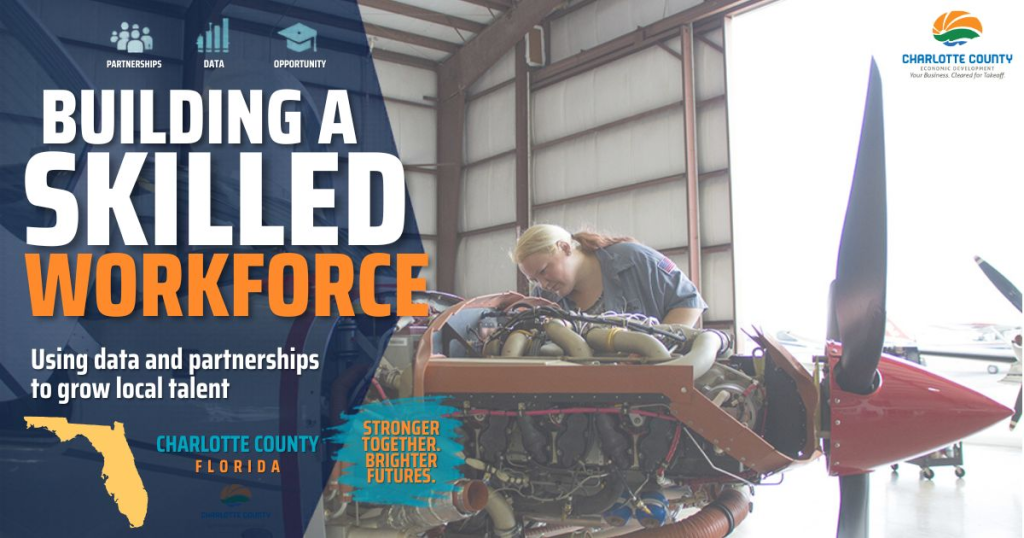
Skilled Workforce
A skilled workforce does not happen by accident. It grows when employers, schools, colleges, and workforce partners look at the same information and work toward the same goal.
That is the value of the Florida Talent Center Data Hub.
Florida Talent Center Data Hub – Orlando Case Study
A recent Orlando-area case study from the Florida Chamber Foundation shows how businesses can use the Data Hub to better understand local talent pipelines. Although the case study focuses on the Orlando region, its approach offers a useful model for Charlotte County employers. The report highlights how businesses in healthcare, information technology, and advanced manufacturing can use education and workforce data to plan for future hiring needs.
For Charlotte County, that message matters.
As local industries grow, employers need more than open positions and job postings. They need a clear view of where future workers are being trained, what programs are producing graduates, and where stronger partnerships may help close gaps.
Why Workforce Data Matters
Workforce planning used to involve a lot of guessing.
An employer needed workers. A school offered programs. A student tried to choose a path. Yet too often, those three pieces did not connect soon enough.
The Florida Talent Center Data Hub helps change that.
According to the case study, businesses can use the platform to review State University System graduate data, Career and Technical Education enrollment, program type, average wage, enrollment, and whether graduates continue education or become employed after graduation. Employers can also filter by institution, career cluster, and program title.
That gives business leaders a better starting point.
For example, a healthcare provider can look at nursing and allied health programs. A manufacturer can review CNC, mechatronics, or electronics technician pathways. A technology company can study programs tied to computer programming, network systems, and information technology.
Then comes the real work.
Employers can build relationships with training providers. They can offer internships; they can support career awareness; they can help students understand what local jobs actually look like.
What the Orlando Case Study Shows
The Orlando case study gives several practical examples.
In healthcare, the report explains how employers can review the pipeline for nursing, medical assisting, and related fields. It also notes that healthcare leaders can work with education partners to expand clinical sites, support scholarships, or invest in facilities that help grow the workforce.
In advanced manufacturing, the report points to opportunities in engineering technology, industrial systems, CNC machining, and mechatronics. Employers can use completion and enrollment data to see where talent is being trained and where more student interest may be needed.
In information technology, the case study shows how companies can use program data to align hiring needs with education pathways in areas such as computer science, cloud computing, cybersecurity, and IT certifications.
The main lesson is simple: data helps employers act sooner.
Instead of waiting for a shortage to become urgent, businesses can spot gaps early. Then, they can help strengthen the pipeline before the need becomes critical.
How Charlotte County Can Apply This Approach
Charlotte County has a strong opportunity to use this same strategy.
Our local economy continues to build momentum in aviation, advanced manufacturing, healthcare, logistics, skilled trades, and technology-related fields. Each of these industries depends on people with the right skills.
That is where better talent pipeline planning becomes a competitive advantage.
Aviation employers can connect with training programs that prepare students for maintenance, technical operations, and related careers. Healthcare employers can work with education partners to support future nurses, technicians, and care teams. Manufacturers can help students see the value of hands-on technical careers that offer strong long-term potential.
And students benefit too.
When businesses show up in classrooms, host tours, support internships, or explain career ladders, students see what is possible close to home. That matters. Many young people do not ignore local careers because they are not interested. Sometimes, they simply have not seen the path yet.
Building a Stronger Local Talent Pipeline
A skilled workforce grows best when employers and educators stay connected.
The first step is simple. Employers should identify the roles they struggle to fill. Then, they should look at the education programs tied to those careers. After that, they can start conversations with schools, colleges, and workforce partners.
Those conversations can lead to real solutions, such as:
- student tours, internships, and job shadowing
- advisory board participation, classroom visits, and stronger career pathways
The goal is not just to fill jobs today. The goal is to build a system that helps local businesses grow and helps local residents see a future here.
That is the power of workforce data. It turns concern into clarity. It turns planning into action. And it gives Charlotte County another way to support business growth, career opportunity, and long-term economic strength.
FAQs About Talent Pipeline Planning
What is the Florida Talent Center Data Hub?
It is a Florida Chamber Foundation platform that brings education and workforce information together so users can better understand talent pipelines.
Why does workforce data matter to employers?
It helps employers see where workers are being trained, which programs are active, and where partnerships may help close talent gaps.
How can Charlotte County businesses use this idea?
They can review local and regional training pathways, connect with education partners, and support students before they enter the workforce.
Which industries benefit from talent pipeline planning?
Healthcare, aviation, advanced manufacturing, information technology, logistics, and skilled trades can all benefit.
What should employers do first?
They should identify hard-to-fill jobs and connect with the schools or programs preparing students for those roles.
Why does this matter for students?
Students gain clearer career options, stronger employer connections, and a better understanding of local opportunities.
Conclusion
The Orlando case study shows how workforce data can help businesses plan with more confidence. For Charlotte County, the same idea can support stronger employer partnerships, clearer career pathways, and a more prepared local workforce.
A skilled workforce is one of the strongest tools a community can build.
Sources
Florida Talent Center Data Hub Orlando Case Study
https://www.flchamber.com/florida-talent-center-data-hub/
https://www.flchamber.com/case-studies-florida-talent-center-data-hub/