Charlotte County Workforce: Stronger Future
July 10th, 2026
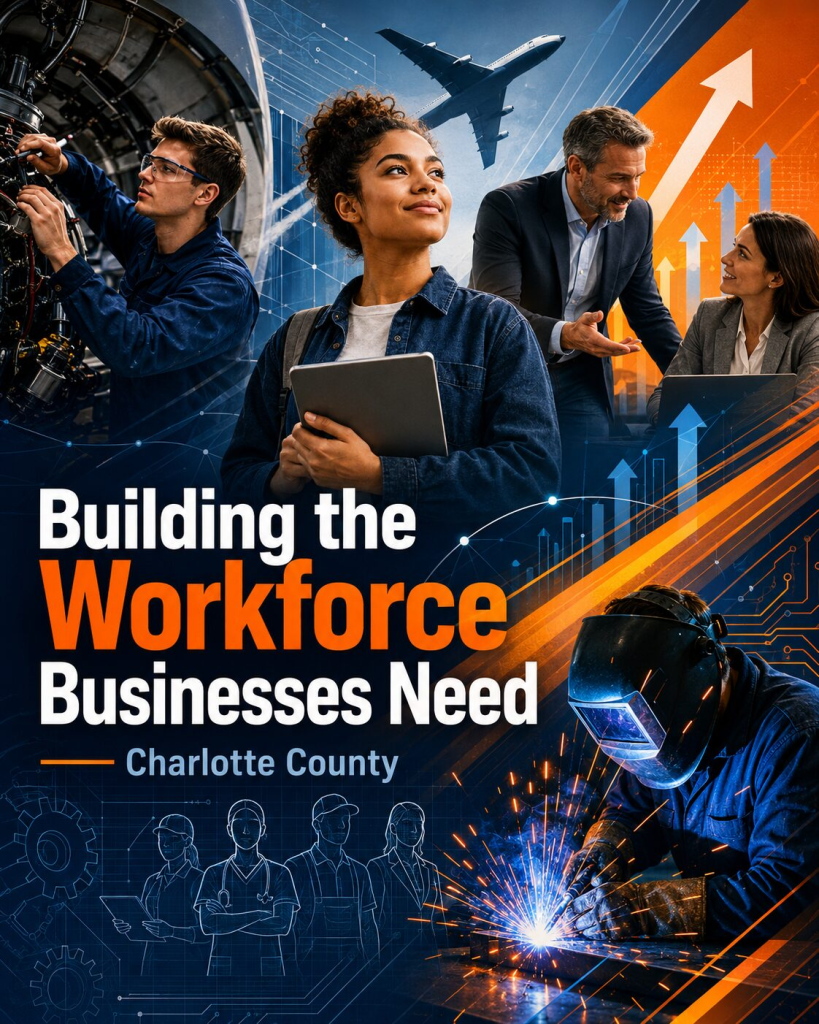
Charlotte County Workforce
Charlotte County workforce development starts long before a company posts a job.
It starts when students see a career path. It starts when schools understand local industry needs. It starts when employers, educators, and community partners work from the same playbook.
For businesses, this matters because workforce is often one of the first questions asked during a location decision. A company may like the site. It may like the access. It may like the cost. However, the next question is usually simple: can we hire the people we need?
That is why education belongs in the economic development conversation.
A recent Work Shift newsletter described education as part of a region’s civic infrastructure, especially when communities connect schools, employers, colleges, and policymakers around economic mobility. The same idea applies in Charlotte County. Strong career pathways help students, workers, and businesses move forward together.
A Strong Talent Pipeline Starts Early
The Charlotte County workforce does not grow by accident.
Charlotte County Public Schools has built career planning around the 3E model: employment, enlistment, and enrollment. The district’s Career Planning Guide helps students choose a path and receive step-by-step guidance for what comes after graduation. CCPS says the goal is for students to leave high school with a well-thought-out plan that can help retain local talent in meaningful careers.
That is exactly the kind of alignment employers want to see.
Not every student needs the same next step. Some will go to college. Some will enter the military. Some will move into employment or technical training. All three paths can strengthen the local economy when they connect to real opportunity.
Career Training Connects Students to Local Jobs
Career and Technical Education helps students understand how classroom learning connects to work.
Charlotte County Public Schools describes its CTE programs as “Creating Pathways for Tomorrow’s Leaders,” and the district highlights programs across career fields that connect students to future employment, enlistment, and enrollment options.
That matters because students are more likely to stay and build a future here when they can see local opportunity clearly.
It also matters to employers. Businesses need workers who understand technical skills, workplace expectations, and the industries growing around them. Career training helps close that gap earlier.
In plain English: students get direction. Employers get a stronger pipeline. Charlotte County gets a more competitive workforce story.
Aviation and Manufacturing Make the Case
Aviation and advanced manufacturing show why this work matters.
Charlotte Technical College’s Aviation Airframe Mechanics program prepares students for employment as aviation maintenance technicians and is certified by the FAA as an Aviation Maintenance Technician School under Part 147. Its Aviation Powerplant Mechanics program also prepares students for employment or advanced training in the commercial and general aviation industry, including preparation for FAA powerplant rating exams.
That is not abstract workforce development. That is training tied to a real industry.
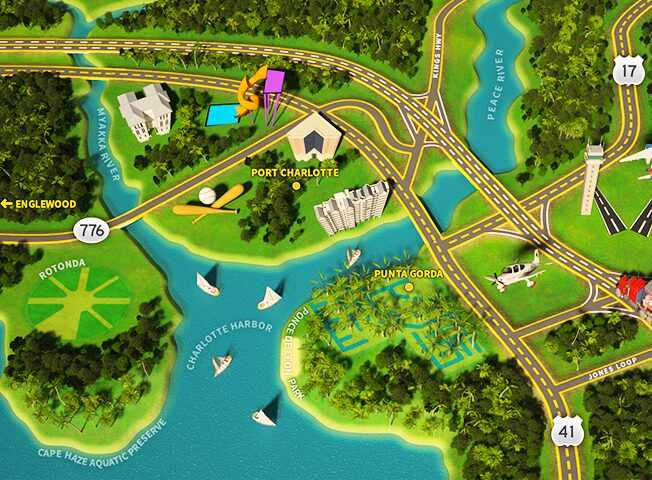
It also connects directly to Charlotte County assets such as Punta Gorda Airport and Enterprise Charlotte Airport Park. CCPS has also announced state support for the Southwest Florida Advanced Manufacturing Training Center, a planned facility intended to expand workforce education and strengthen regional economic development.
This is the model businesses want to see: training close to industry, students close to opportunity, and partners focused on the same future.
Why This Matters to Business Growth
The Charlotte County workforce is part of the county’s business case.
When companies look at Charlotte County, we can talk about location, infrastructure, available sites, quality of life, and access to Southwest Florida markets. However, we also need to show that the community is preparing people for the jobs local employers need now and the industries we want to grow next.
That is why education is not a side story.
It supports business retention. It supports business recruitment. It supports workforce attraction. It also helps families see that Charlotte County is not only a place to live, but a place to build a career.
The stronger the connection between schools, technical training, employers, and economic development partners, the stronger our growth story becomes.
Conclusion
The Charlotte County workforce is being built through schools, technical training, employer partnerships, and career pathways that connect people to opportunity.
Businesses care because they need talent. Students care because they need direction. Families care because they want opportunity close to home. Partners care because workforce readiness shapes the future of the local economy.
In Charlotte County, workforce development is not just a program.
It is part of how we grow.