Manufacturing Workforce: Powerful Local Career Paths
June 2nd, 2026
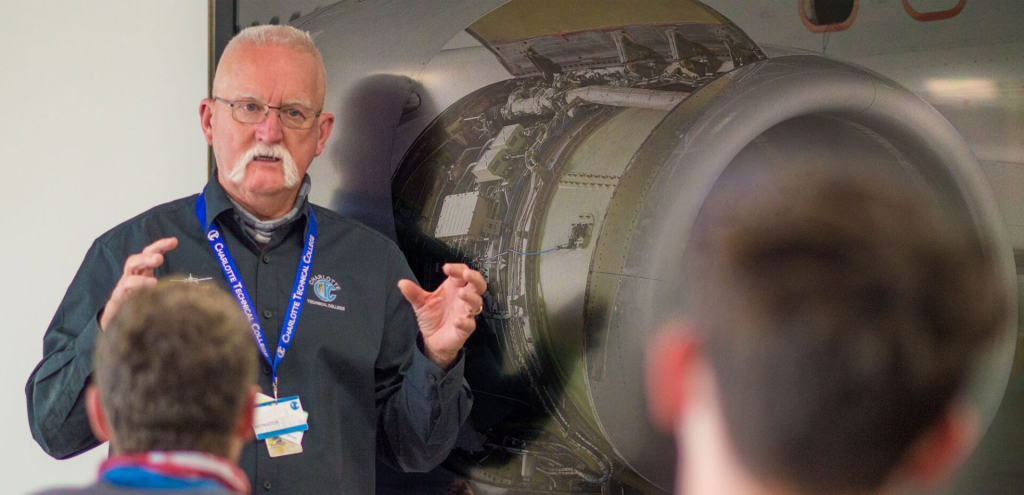
Manufacturing workforce
The manufacturing workforce is changing fast in Southwest Florida. For years, many students heard the same message: go to a four-year college or risk falling behind. Today, that message feels too narrow. Employers need skilled people now. Meanwhile, students want strong careers without years of debt. Families also want smart options that lead to real paychecks.
That is why technical education matters.
A recent WINK News report showed that more students are choosing technical colleges as employers search for skilled workers across Southwest Florida. The story highlighted growing demand in healthcare, construction, aviation, and advanced manufacturing. It also explained that many technical programs can be completed in about a year, giving students a faster path into the workforce.
This shift matters for Charlotte County. It also matters for companies that are looking at the region for expansion, relocation, or long-term growth. A strong manufacturing workforce does not appear overnight. Instead, it grows through training, employer partnerships, student awareness, and steady local investment.
Charlotte County is building that system piece by piece.
Local partners are helping connect students to careers that once felt out of reach. Charlotte Technical College, Charlotte County Public Schools, Punta Gorda Airport, and regional employers all play a role. Aviation is one of the clearest examples. According to the WINK story, Dr. Brian Granstra of Charlotte County Public Schools identified aviation as one of the major local workforce needs, along with healthcare and construction.
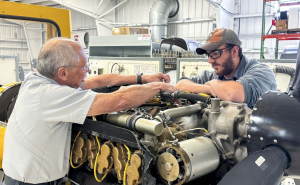 That point should not get buried. Aviation is not only about pilots. It also includes maintenance, avionics, aerospace manufacturing, aircraft assembly, logistics, cybersecurity, and advanced technical support. As a result, aviation connects directly to the manufacturing workforce.
Charlotte County’s career training strategy also aligns with Space Florida’s statewide focus on aerospace-related skills. Charlotte County Public Schools lists Space Academy course areas that include aviation and aerospace, advanced manufacturing, construction, cybersecurity and IT, logistics, and semiconductors. Space Florida also says its Academy Program connects career and technical education options to skills that are in demand by the aerospace industry.
So, the real story is bigger than one article. Technical education is not a backup plan. It is a launchpad.
Why technical colleges are gaining momentum
Technical colleges are gaining attention because they solve a practical problem. Students need jobs. Employers need workers. Traditional college can help many people, but it is not the only path. For some students, a shorter and more focused program makes more sense.
Faster training for real jobs
The WINK News article described the appeal of the “career in a year” model. In that model, students build hands-on skills and earn credentials in months rather than years. That matters because time matters. A student who finishes training faster can begin earning faster. They can gain experience sooner. In addition, they may avoid taking on large debt before they even know where their career will lead.
This approach fits the needs of today’s manufacturing workforce. Employers want people who can do the work. They need workers who can read technical instructions, use equipment safely, solve problems, and adapt. In fields like aviation and advanced manufacturing, those skills carry real value.
Moreover, technical programs often feel more direct. Students can see how the training connects to a job. They are not guessing. They are learning skills that employers already need.
For many families, that clarity is a major benefit. A technical program can give a student direction. It can connect school to income. Most importantly, it can turn “What do I want to do?” into “Here is my next step.” 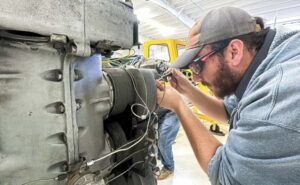
Hands-on learning that fits today’s economy
Technical colleges also help students learn by doing. That matters, too. Some students do not thrive in a lecture-first environment. They learn better when they can touch the tools, test the process, and see how the work fits together.
A classroom can explain a system. However, a lab can make that system real.
The good news? Technical education can also stack. A student can earn a credential, get hired, and keep building. Later, they may return for more training. They may move into supervision. They may pursue a degree after gaining work experience. Therefore, the first step does not have to be the final step.
That flexibility is important in Charlotte County because local industries are not standing still. Punta Gorda Airport continues to anchor aviation opportunity. Manufacturers need skilled production talent. Aerospace-related suppliers need technicians. Construction firms need trained workers. Healthcare employers need support. Because of that, the regional economy needs many pathways, not just one.
For employers, this creates a stronger local hiring pool. Instead of recruiting every skilled worker from somewhere else, companies can look closer to home. That helps keep talent in the community. It also shows site selectors and business leaders that Charlotte County is serious about workforce readiness.
Charlotte Technical College and local career training
Charlotte Technical College plays an important role in this story. CTC serves adult learners and students who want focused, career-connected training. According to WINK News, most adult education programs in Charlotte County are at or near capacity. That strong demand shows how much interest exists in technical education locally.
CTC helps connect students to career pathways
The demand did not happen by accident. It reflects the way students and families are thinking differently about work. Many want a faster route to a stable career. Others want training that feels connected to local employers. As a result, technical education has become more attractive and more relevant.
Charlotte Technical College’s advanced manufacturing program is part of the college’s broader technical training structure. The college offers programs connected to high-demand career areas, including advanced manufacturing and aviation.
This matters because the manufacturing workforce includes more than new graduates. It includes career changers, veterans, parents returning to work, and workers who want to move into better-paying roles.
Here is where Charlotte County has a strong story to tell.
Career and technical education works best when it connects to actual industry needs. In Charlotte County, those needs include aviation, advanced manufacturing, construction, healthcare, logistics, and cybersecurity. CTC and Charlotte County Public Schools are not training students in a vacuum. Instead, they are helping prepare people for jobs that local and regional employers need filled.
Local training supports local employers
The Space Florida connection adds another layer. Charlotte County Public Schools received a Space Florida District Designation, connecting the district to a statewide effort focused on aerospace career pathways. Charlotte County Economic Development reported that Space Florida and 23 school districts adopted the Space Florida Academy Program to help propel students into high-demand aerospace careers.
That alignment is important for business attraction. When a company evaluates a community, it does not only look at land, buildings, utilities, and road access. It also asks a simple question: Can we hire here?
A strong answer gives Charlotte County an advantage.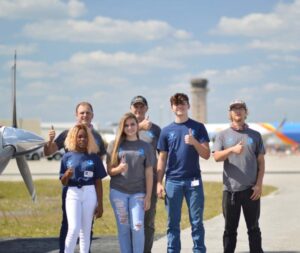
CTC helps strengthen that answer. So do high school programs that introduce students to aviation and manufacturing earlier. When students can see a career before graduation, they can make better choices. They can picture the work. They can meet employers. In addition, they can understand that technical careers can be skilled, respected, and well-paid.
That kind of exposure also helps fight an old myth: that technical education is somehow less valuable. It is not. In many cases, it is direct, efficient, and highly relevant.
Advanced manufacturing and aviation pathways in Charlotte County
Advanced manufacturing and aviation are closely connected in Charlotte County’s workforce story. That connection is not abstract. It shows up in training investments, airport-area development, and school district partnerships.
Aviation is more than flying planes
The WINK article reported that Charlotte County has invested in aviation training, including new hangars at Punta Gorda Airport and Charlotte High School. It also noted that the district is expanding advanced manufacturing and cybersecurity programs while partnering with Space Florida to align training with future aerospace workforce needs.
That is a big deal.
Aviation depends on a skilled technical base. Aircraft maintenance, avionics, parts production, assembly, inspection, logistics, and repair all need trained workers. Advanced manufacturing supports many of those same functions. Therefore, when those pathways grow together, they create a stronger manufacturing workforce.
The connection also helps students see more career options. A student may start with an interest in airplanes. Then, they may discover avionics, maintenance, welding, electronics, production, or quality control. Likewise, a student who enjoys building things may find a path into aerospace-related manufacturing.
That kind of discovery can change a life.
Advanced manufacturing builds the talent pipeline
Charlotte County Public Schools also announced a $1.75 million state appropriation to establish the Southwest Florida Advanced Manufacturing Training Center. According to the district, the center will support hands-on training and industry-recognized credentials in aerospace and advanced manufacturing. It will be located within Enterprise Charlotte Airport Park at Punta Gorda Airport.
That location matters. Training near the airport connects students to the kind of environment where aviation and manufacturing employers can grow. It also sends a clear message: Charlotte County is preparing workers for industries tied to real local assets.
Punta Gorda Airport has also highlighted the importance of workforce development in aerospace. In a workforce update, Dr. Granstra discussed the value of building a talented workforce to help attract aerospace-related businesses to Charlotte County.
For students, the opportunity is practical. They can train close to home, build skills that transfer across industries, can also enter a career field with room to grow. For employers, the benefit is just as clear. A local pipeline reduces hiring friction. It also gives companies more confidence when they plan expansion.
This is especially important for advanced manufacturing. Modern manufacturing is not the old assembly-line stereotype. It is technical, precise, involves robotics, computer-controlled systems, quality control, fabrication, supply chain coordination, and aerospace components. Students need to know these jobs exist. Parents need to know these careers are real. Employers need to know the training pipeline is growing.
Charlotte County’s strategy helps connect all three. In the long run, the manufacturing workforce becomes more than a labor statistic. It becomes a community asset, helps young people stay local, helps adults change careers, helps companies grow and finally, it helps the county compete.
What this means for employers and families
For employers, the rise of technical education creates a stronger case for Charlotte County. A company looking at Southwest Florida wants more than a nice location. It wants proof that the community can support growth. Workforce is often the deciding factor.
Employers gain a stronger local talent pool
A stronger manufacturing workforce can help companies reduce recruiting costs, train faster, and build deeper local roots. It can also help employers partner with schools earlier. For example, companies may support guest speaking, internships, advisory boards, facility tours, job fairs, and equipment input.
Those partnerships matter because employers know what skills are needed on the floor, in the hangar, and in the field. Meanwhile, educators know how to build learning environments that prepare students. When both sides work together, students benefit.
In addition, strong local training can improve business recruitment. Site selectors often want evidence that a community can support growth. A skilled workforce pipeline gives Charlotte County a stronger answer.
Families gain more career options
For families, this shift opens more doors. A student who likes working with their hands may see a future in aviation maintenance or advanced manufacturing. Also, a student who enjoys technology may connect with cybersecurity or avionics. A student who wants a stable career quickly may choose a technical program before deciding whether to pursue more education later.
The best part? These options can work together. Technical education does not close doors. In many cases, it opens them.
Charlotte County’s workforce message should be simple and strong: students can build meaningful careers here. They do not have to leave to find opportunity. They do not have to choose between college and success. Instead, they can choose the route that fits their goals.
That is also a talent attraction message. When young workers see a future in Charlotte County, they are more likely to stay. When families see career pathways, they are more likely to invest in the community. Likewise, when employers see a growing pipeline, they are more likely to expand.
This is why the WINK story matters. It is not only about more students choosing technical colleges. It is about a regional mindset shift. Southwest Florida is recognizing that skilled careers deserve attention, respect, and investment. Charlotte County is already part of that shift.
FAQs about technical education and workforce training
What is the manufacturing workforce?
The manufacturing workforce includes people who help produce, assemble, repair, inspect, move, and support manufactured goods. In Charlotte County, that can connect to aviation, aerospace, advanced manufacturing, logistics, and related technical careers.
Why are more students choosing technical colleges?
Many students want faster, more affordable career training. Technical colleges often offer hands-on programs that can be completed in less time than a traditional degree. WINK News reported that many students are drawn to career-focused training that can lead to employment within months or about a year.
How does Charlotte Technical College support workforce development?
Charlotte Technical College helps students and adult learners gain practical skills for local career fields. Its programs support workforce needs by preparing people for jobs that require technical knowledge, hands-on training, and industry readiness.
Why does aviation matter in Charlotte County?
Aviation is one of Charlotte County’s major growth opportunities. The WINK article noted that local education leaders see aviation as a key workforce need specific to Charlotte County. Punta Gorda Airport, aviation training, and aerospace-related partnerships help strengthen that opportunity.
How does advanced manufacturing connect to aviation?
Advanced manufacturing supports aviation through aircraft parts, assembly, fabrication, repair support, quality control, logistics, and aerospace production. Space Florida’s Academy Program also identifies aviation and aerospace careers as high-demand pathways tied to career and technical education.
What is the Southwest Florida Advanced Manufacturing Training Center?
Charlotte County Public Schools announced that a $1.75 million state appropriation will help establish the Southwest Florida Advanced Manufacturing Training Center. The center is planned as a regional training hub for aerospace and advanced manufacturing at Enterprise Charlotte Airport Park.
Conclusion
The manufacturing workforce is one of Charlotte County’s strongest economic development stories because it connects people, education, and industry. It gives students a faster way to build careers, gives employers a stronger local talent pipeline, and it also gives families more confidence that opportunity exists close to home.
Technical education is no longer a quiet side path. It is becoming a front door to high-skill careers.
Charlotte Technical College, Charlotte County Public Schools, Punta Gorda Airport, and Space Florida-aligned programs are helping prepare students for the future of work. Advanced manufacturing and aviation are central to that future. Together, they show that Charlotte County is not just talking about workforce development. It is building it.
Sources
- WINK News, “More students choosing technical colleges as employers seek workers,” Damien Alvarado, May 26, 2026.
https://www.winknews.com/news/more-students-choosing-technical-colleges-as-employers-seek-workers/article_16116f82-07dd-4df1-be32-415b320402f1.html - Charlotte County Public Schools Career & Technical Education
https://www.yourcharlotteschools.net/cte - Space Florida Academy Program
https://www.spaceflorida.gov/space-florida-academy-program - Charlotte County Economic Development, “Charlotte County Public Schools Receives Space Florida District Designation”
https://cleared4takeoff.com/charlotte-county-public-schools-receives-space-florida-district-designation/ - Charlotte Technical College
https://ctc.yourcharlotteschools.net/ - Charlotte Technical College, Advanced Manufacturing
https://ctc.yourcharlotteschools.net/advancedmanufacturing - Charlotte County Public Schools, “DeSantis Approves $1.75 Million for CCPS Advanced Manufacturing Training Center”
https://www.yourcharlotteschools.net/index.php?articleID=53973864&pageID=smartSiteFeed - Punta Gorda Airport, “Workforce Update: Aerospace Feeder Program Coming”
https://www.flypgd.com/aerospace-feeder-ctc/