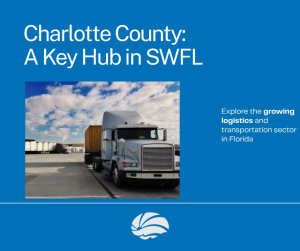
Charlotte County Florida Logistics: A Powerful Hub for Growth
November 14th, 2025

Charlotte County Florida Logistics and Why It Matters
Charlotte County, Florida, has quickly gained attention as one of the fastest-rising logistics hubs in South Florida. In today’s economy, companies want three things: faster delivery times, reduced costs, and dependable infrastructure. Charlotte County offers all of these in one package. That’s why logistics leaders—from trucking firms to global e-commerce giants—are looking here instead of the state’s more expensive metro markets.
At its core, logistics is about connection. How fast can goods move from point A to point B? How reliable are the systems that support those movements? And how cost-effective is it for a business to operate in a certain region? Charlotte County Florida logistics answers those questions with clear advantages.
The county’s geographic location places it in the middle of South Florida’s major trade routes. Its infrastructure, built around Interstate 75 and supported by regional airports and seaports, ensures uninterrupted freight movement. Meanwhile, rental rates for industrial space remain lower than in nearby Miami, Tampa, or Orlando. This balance between affordability and accessibility makes Charlotte County a magnet for companies that want to stretch their supply chain dollars further without sacrificing performance.
Local leadership has also leaned into this momentum.
The Charlotte County Economic Development Office works directly with site selectors, trucking firms, and manufacturers to ensure the region remains competitive. They offer incentives, workforce support, and quick permitting processes that keep projects moving. It’s not just about offering land or warehouses. It’s about creating an environment where logistics companies can grow with confidence.
For businesses weighing their options, the choice often comes down to cost versus access. In Charlotte County, they get both. They access Florida’s most important markets within hours while saving on operational costs that eat into profit margins elsewhere. That’s why more and more supply chain leaders are saying: Charlotte County isn’t just part of the logistics network. It’s the heart of it.
Strategic Location at the Center of South Florida
When it comes to logistics, location isn’t a detail—it’s the entire story. Charlotte County’s location gives companies an advantage that’s hard to match anywhere else in South Florida.
The backbone of this advantage is Interstate 75, one of the most critical freight corridors in the southeastern United States. Running north-south along the Gulf Coast, I-75 connects Charlotte County directly to Miami in the south and to Atlanta and beyond in the north. Trucks leaving Charlotte County reach Orlando and Tampa within a short drive, making same-day delivery across multiple metro areas possible.
This highway advantage matters even more in the age of e-commerce. Online shoppers expect two-day shipping, sometimes even same-day delivery. A distribution center in Charlotte County can serve millions of Floridians with speed that rivals—or surpasses—centers in bigger cities. And because traffic congestion is lighter here than in Miami or Orlando, transit times become more reliable. Reliability translates to customer satisfaction, which keeps companies competitive.
But highways are only part of the story.
Ports play a critical role too. Charlotte County sits within reach of Port Manatee and Port Tampa Bay, two of Florida’s busiest shipping gateways. These ports link companies to Latin America, the Caribbean, and global markets. Goods arriving at the ports move quickly by truck through Charlotte County’s distribution hubs, then fan out across the state. That efficiency saves companies both time and money.
Punta Gorda Airport (PGD) supports commercial passenger service and general aviation, providing air access for business travel and aviation-related operations. Together with Interstate 75 and access to regional seaports, these transportation connections support regional mobility and commerce.
Add to that Charlotte County’s centralized positioning in South Florida, and you have a formula for reduced operational costs. A truck based here doesn’t waste time driving empty miles. Instead, routes optimize fuel, time, and labor. For companies managing large-scale distribution networks, those savings add up to millions of dollars over time.
This strategic location is not just about moving goods. It’s about giving businesses the confidence to scale. Whether a company runs five trucks or five hundred, Charlotte County’s geography ensures that every mile counts.
Infrastructure That Works for Logistics Companies
Strong infrastructure is the backbone of logistics. Without it, even the best location fails. Charlotte County has recognized this reality and invested heavily in creating systems that work for freight-dependent businesses.
First and foremost is the highway system. Interstate 75 serves as the main artery, carrying thousands of trucks daily through Charlotte County. Local and state governments have prioritized expansions and improvements to ensure this corridor remains efficient. Complementary road networks, such as U.S. 41 and state highways, add redundancy and local access that keeps goods flowing smoothly.
Air infrastructure continues to evolve too. Punta Gorda Airport supports commercial passenger service and general aviation. Its location near Interstate 75, industrial parks, and warehouse areas provides convenient access for business travel and aviation-related operations.
Warehousing has emerged as another strength.
Over the last decade, Charlotte County has seen significant growth in warehouse development. Industrial parks near Punta Gorda and Port Charlotte feature modern facilities designed to meet the needs of e-commerce companies, manufacturers, and logistics providers. Unlike older warehouses in larger cities, these facilities offer higher clear heights, stronger power capabilities, and better truck access—all at lower lease rates.
Trucking facilities also benefit from Charlotte County’s investment in infrastructure. Companies find space for fleets, maintenance, and driver support without the headaches of urban congestion. With land available for future industrial growth, Charlotte County offers expansion opportunities that urban centers simply can’t provide anymore.
Finally, technology integration makes Charlotte County’s infrastructure even stronger. Local developers and county leaders recognize that modern logistics requires smart solutions, from real-time tracking to automated warehousing systems. As new facilities rise, they integrate these technologies from the ground up, ensuring businesses have the tools to compete in a digital-first logistics world.
This combination of highways, ports, airports, warehousing, and technology creates a complete package. Businesses don’t just find infrastructure in Charlotte County—they find infrastructure that’s built to work seamlessly, today and tomorrow.
Business Advantages of Choosing Charlotte County
For many companies, the final decision comes down to cost. Can a business reduce expenses without sacrificing quality? In Charlotte County, the answer is yes.
The first advantage is lower operating costs. Industrial rents, utility rates, and property costs in Charlotte County are far more affordable than in Miami, Orlando, or Tampa. For companies running large warehouses, that difference translates to significant savings every year. And when you combine those savings with lower labor and transportation costs, the financial case becomes clear.
The other major advantage is the workforce.
A logistics hub is only as strong as the people who run it, and Charlotte County has invested in workforce pipelines that deliver skilled talent. Charlotte Technical College, Florida SouthWestern State College, Florida Gulf Coast University, and partnerships with regional universities ensure that employers have access to trained workers. Programs focus on logistics, advanced manufacturing, and supply chain management, helping businesses fill roles ranging from drivers to warehouse managers to logistics coordinators.
Beyond these practical benefits, businesses in Charlotte County enjoy something harder to measure but just as important: community support. Local government works hand in hand with industry. Chambers of commerce, workforce boards, and the Economic Development Office create a collaborative environment where businesses feel valued and supported.
For a trucking company choosing between Charlotte County and Miami, the decision often comes down to congestion, cost, and community. Charlotte County wins on all three. For a manufacturer seeking a new distribution hub, Charlotte County’s affordable industrial parks and supportive workforce give it the edge.
These advantages explain why Charlotte County Florida logistics has moved from a regional option to a statewide leader. The region doesn’t just attract companies—it helps them thrive.
The Role of Charlotte County in South Florida Logistics
Charlotte County isn’t just another logistics stop on the map. It’s becoming a driving force in South Florida’s entire supply chain ecosystem.
The rise of e-commerce has created unprecedented demand for warehouses, trucking, and distribution centers. Charlotte County has stepped into this role with readiness. Industrial parks are expanding, warehousing space is increasing, and developers continue to invest in new projects. These expansions aren’t happening by chance—they’re part of a coordinated effort to meet future demand.
Partnerships fuel this progress.
The Charlotte County Economic Development Office works closely with site selectors, logistics firms, and manufacturers to understand their needs. This proactive approach ensures that when a company chooses Charlotte County, they’re not left to figure things out alone. Instead, they receive tailored support that makes operations smoother and expansion faster.
Future development projects make the county’s role even stronger. Plans for new industrial parks near Punta Gorda Airport, upgrades to freight corridors, and technology-driven warehouse construction promise more capacity and efficiency. With Florida’s population continuing to grow, demand for logistics services will only increase—and Charlotte County is preparing now.
This forward-looking mindset sets Charlotte County apart. Many regions react to growth after the fact. Charlotte County anticipates it, plans for it, and invests ahead of the curve. That’s why logistics companies view it not just as a hub, but as a partner in growth.
When you combine geographic advantages, infrastructure, business incentives, and future-focused planning, you see why Charlotte County’s role in South Florida logistics will only grow stronger in the years ahead.
Conclusion: The Smart Choice for Logistics Growth
Charlotte County Florida logistics is more than a location—it’s a growth strategy. Companies that move here gain faster market access, lower operating costs, modern infrastructure, and a supportive community.
Whether your business specializes in trucking, warehousing, advanced manufacturing, or e-commerce distribution, Charlotte County provides the foundation you need to thrive. Its role as a logistics hub continues to expand, making it one of the most strategic choices in all of South Florida.
Ready to learn more? Visit Cleared4Takeoff.com to explore properties, incentives, and opportunities for your logistics operations.
Frequently Asked Questions
Why is Charlotte County important for logistics?
Its central location in South Florida, direct highway access, and proximity to ports and airports make it a cost-saving hub for distribution.
What industries benefit most from Charlotte County Florida logistics?
Retail, e-commerce, advanced manufacturing, and trucking all thrive thanks to strong infrastructure and business support.
Is warehouse space affordable in Charlotte County?
Yes. Compared to Miami or Tampa, Charlotte County offers lower rental costs with modern facilities.
Yes. Local programs offer grants, tax incentives, and workforce training support for expanding businesses.
What’s the future of logistics in Charlotte County?
Ongoing infrastructure investments and industrial developments point to continued growth and leadership in South Florida logistics.