40 Under 40: Isaac James Is Building a Stronger Charlotte County
August 25th, 2025

Charlotte County Florida Infrastructure
Charlotte County Florida infrastructure isn’t just about roads and power lines. It’s about people. It’s about the networks, physical and human, that make a place livable, lovable, and long-lasting. And few people reflect that system better than Isaac James, Executive Director of the Military Heritage Museum and one of the newest honorees in Charlotte County’s 40 Under 40 series.
From revitalizing arts venues to building community coalitions, Isaac’s story is woven into the very foundation that helps this region thrive.
Leadership Anchored in History
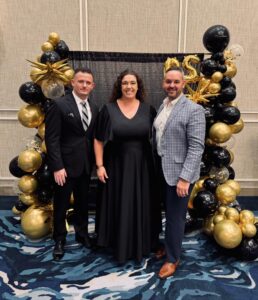
Isaac James didn’t grow into leadership by chasing titles. He grew into it by standing on the shoulders of giants—his grandfathers. Both served in the United States Army. One wore the uniform in the early 1960s. The other served during the Vietnam War. Though their service came decades apart, their legacies left the same mark.
“Their dedication, discipline, and love of country deeply influenced the way I live my life,” Isaac shared. “They shaped the values that guide me today.”
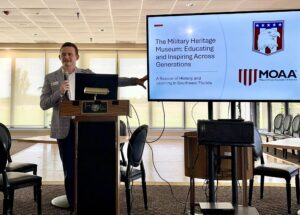
It’s no coincidence that Isaac now leads one of the region’s most respected cultural institutions—the Military Heritage Museum in Punta Gorda. There, he doesn’t just curate artifacts. He builds bridges between generations.
And that work, he believes, is more urgent than ever.
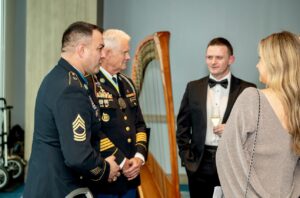
In a world filled with fast-moving headlines and fleeting attention spans, Isaac works to slow things down. To help young people stop, look a veteran in the eyes, and truly listen.
“There’s nothing more powerful than seeing a veteran’s eyes light up as they share their story with a group of students,” Isaac explained. “And watching those students really listen and ask questions. That kind of connection makes history come alive.”
Moments That Grow Leaders
It’s in those unscripted moments—when a young person suddenly connects the freedom they enjoy today to the courage and sacrifice of someone sitting just feet away—that civic values take root.
For Isaac, this work is about more than remembrance. It’s about relevance.
“When history feels personal, it becomes meaningful. And when it becomes meaningful, it can inspire someone to serve, to lead, or simply to care more about the world around them.”
Whether it’s a fourth grader hearing a WWII veteran speak for the first time, or a high school student realizing military service isn’t just something in textbooks, Isaac helps create moments that matter.
Moments that grow leaders.

Resilience Through Relocation
Every leader has a moment when the path forward isn’t clear. For Isaac James, that moment came in 2018 after an unimaginable personal loss.
“I lost my mother far too young to multiple myeloma,” he shared. “It was devastating.”
Grief has a way of reshaping what matters. For Isaac, it marked a turning point. The city he had called home no longer felt like home. He needed space to breathe, to heal, and to rediscover who he was without the one person who had been his greatest source of strength.
New York, with all its memories and momentum, had become too heavy to carry. So he looked south, toward a place where the sunsets were familiar, the pace was slower, and the possibilities were open.
Isaac had spent nearly a decade vacationing in Southwest Florida. The area already had his heart in subtle ways. But it wasn’t until close friends—Gary Butler, then Executive Director of the Military Heritage Museum, and his wife—encouraged him to make the leap that he began to see a future there.
Fresh Start
“I needed a fresh start,” he said. “And I’m grateful they encouraged me to take it.”
What started as a relocation quickly became a rebirth. Isaac didn’t just move to Charlotte County—he rooted himself in it. He poured his energy into building relationships, not resumes. He showed up, time and again, to serve, to support, and to connect.
“I knew I wanted to stay once I began forming friendships with people I truly respected,” he said. “The more I connected, the more it felt like home.”
He had considered moving to the Tampa area, where many of his close friends had already settled. But after expanding his circle and getting to know the amazing people in this community, he realized that Punta Gorda was where he truly belonged.
Like many who come to Charlotte County during a season of transition, Isaac found something more than sunshine. He found a sense of place. One where neighbors still say hello. One where purpose is measured not just by what you do, but by who you uplift.
Charlotte County’s blend of community, culture, and compassion offered more than a landing pad. It offered Isaac the space to lead with heart again. And that, perhaps, is the truest measure of infrastructure: not just the physical systems that support life, but the emotional ones that support renewal.
In a time of grief, Charlotte County gave Isaac not just a new zip code—it gave him a new direction.

The Gulf Theater Revival
One of Isaac’s most visible contributions has been the transformation of the Gulf Theater at the Military Heritage Museum into a vibrant venue that brings live music and performing arts to the heart of Charlotte County.
The idea first took shape in early 2019, shortly after Isaac joined the museum’s staff. At the time, Gary Butler served as Executive Director and former Punta Gorda Mayor Marilyn Smith-Mooney was board president. Together, they saw untapped potential in a space that had not yet found its audience.
“The vision for the Gulf Theater really started in early 2019 when Gary Butler brought me on staff at the museum,” Isaac said. “At the time, former Punta Gorda Mayor Marilyn Smith-Mooney was the board president, and she and Gary both saw so much potential in that theater space.”
Isaac and the leadership team recognized a need that hadn’t yet been met.
“There was a huge gap in the music and performing arts scene between Venice and Fort Myers,” he explained. “People were driving 45 minutes to an hour just to see their favorite bands. We wanted to give them a reason to stay right here.”
With thoughtful programming and strong community support, the Gulf Theater began to grow. Isaac helped shape a lineup that offered more than convenience—it brought quality entertainment to a local stage. The venue gained loyal patrons and became a key part of the Military Heritage Museum’s mission.
Since then, the Gulf Theater has taken off. The vision that began with a simple conversation became something much more: a gathering place, a cultural anchor, and a new reason for people to connect right here in Charlotte County.
Civic Engagement Starts With Trust
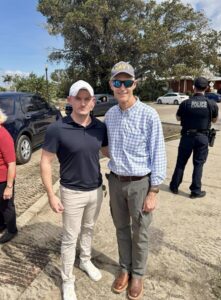
For Isaac James, leadership isn’t about holding a title. It’s about showing up, following through, and building trust one relationship at a time. That philosophy has shaped every role he’s taken on in Charlotte County and continues to guide his growing impact on the community.
“Public service means giving back to the community and being part of something bigger than yourself,” he said. “It’s about showing up, doing the work, and trying to make a difference in people’s lives. It’s not about titles or recognition; it’s about helping others, building trust, and doing what’s right even when it’s not easy.”
Isaac’s approach is grounded in presence. Whether it’s a one-on-one conversation with a volunteer or a strategy session with civic partners, he makes it a point to lead by listening. And that’s earned him the trust of peers across the public and private sectors.
“When people feel heard, they get excited to help,” Isaac explained. “That energy spreads. It becomes contagious.”
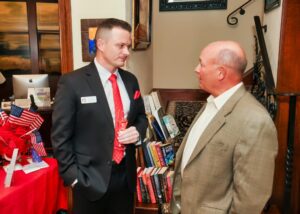
Now serving as the incoming President of the Punta Gorda Chamber of Commerce, Isaac continues to amplify the voices of local business owners and nonprofit leaders. He also represents the Chamber on the City’s 1% Sales Tax Committee, a group tasked with helping shape how community investment funds are allocated.
Through these roles, he focuses on solutions that align economic development with quality of life, championing projects that strengthen downtown vibrancy, support tourism, and enhance community infrastructure in ways that benefit residents and visitors alike.
His leadership style reflects Charlotte County’s values: open, collaborative, and committed to long-term relationships. He takes time to listen, to show up in person, and to ensure that people—whether volunteers, board members, or business owners—feel that their voice truly matters.
For Isaac, civic engagement is not a buzzword. It’s a habit. And over time, it builds something more durable than policies or programs—it builds trust.
Nonprofits as Growth Engines
Charlotte County’s nonprofit sector is more than charitable. It’s foundational. And Isaac James’ ongoing leadership across multiple organizations shows just how essential these groups are to the region’s resilience, culture, and economic identity.
“I’m really proud of the nonprofits and organizations I’m involved with,” Isaac shared. “As the incoming President of the Chamber, I have a deep respect and appreciation for our local businesses. I want to see this area grow—not just for their success, but for the overall economy of Charlotte County.”
That mindset—balancing commerce with community—drives his work across both the private and nonprofit sectors. Isaac currently serves on the City’s 1% Sales Tax Committee, where he helps shape long-term priorities for local investment. He also played a key role in supporting the Florida Philharmonic after the closure of the Punta Gorda Symphony, ensuring the continuation of classical music in the community by serving on the board and stepping in during a critical leadership transition.
“And on Sunday mornings, you can find me at the Episcopal Church of the Good Shepherd on West Henry Street as their Music Director,” he added. That consistency—showing up weekly to serve through music—reflects his broader commitment to giving back through both professional and personal avenues.
“I love the City of Punta Gorda so much,” Isaac said. “And I feel lucky to be part of something that truly matters.”
These roles reflect more than community service. They represent Charlotte County’s vision for sustainable growth—one where economic development is rooted not just in buildings and business parks, but in relationships, belonging, and quality of life.
Community Projects That Keep the Arts Alive
One of Isaac’s proudest moments came during a fragile and uncertain time for the local arts scene. When the Punta Gorda Symphony closed, Charlotte County faced the real possibility of losing a long-standing tradition of classical music that had enriched the community for decades.
Rather than let that legacy fade, Isaac stepped in to help preserve it. He was asked to take on the role of Executive Director of the Florida Philharmonic on an interim basis, helping the newly formed organization get off the ground during its critical first season.
“I was very proud to be asked to step in as Executive Director of the Florida Philharmonic for six months to help get them off the ground after the Punta Gorda Symphony closed,” he said. “It was an important time for our arts community, and I wanted to make sure we didn’t lose that legacy of classical music in the area.”
Isaac helped get the organization organized, supported early operations, and ensured the group was well-positioned for its inaugural season. From scheduling and logistics to working with musicians and volunteers, he brought structure and momentum to an effort that could have otherwise stalled.
“I helped get things organized and set up for their first season, and seeing it come together successfully was incredibly rewarding,” he said. “I’m so happy for them and proud to have played a part in helping them get started.”
The effort didn’t just preserve a genre—it protected a vital piece of Charlotte County’s cultural identity. Thanks to Isaac’s leadership, classical music continues to have a home here, and residents now have a new reason to gather, listen, and take pride in the arts.
The Role of Culture in Economic Development
Why should arts, culture, and history be part of a county’s growth strategy?
Because they are identity-builders. They’re what makes a place memorable and magnetic.
“Arts, culture, and history give a place character. They create pride and make people want to visit, live, and invest here,” Isaac said.
Charlotte County Economic Development focuses on more than commerce. It invests in authenticity. Strong cultural institutions help attract businesses, stimulate tourism, and support creative jobs that deepen the region’s economic base.
When these assets are vibrant, they create ripple effects—fueling restaurant traffic, hotel bookings, and small business growth. The presence of theaters, galleries, and museums also plays a growing role in workforce recruitment, especially among creative professionals and remote workers seeking lifestyle-driven relocation. For families and retirees alike, a thriving arts scene signals a higher quality of life.
“When you invest in arts and history, you’re not just preserving the past,” he said. “You’re fueling the future.”
Infrastructure for Community Life
Ask Isaac about his perfect day in Charlotte County, and it’s clear—he’s living it.
He starts with an early gym session. Then it’s a jog downtown and coffee from Punta Gorda Coffee & Tea. Maybe a Kingfisher cruise from Fishermen’s Village. And he wraps it all up with a cold beer and a ball game at Leroy’s.
“It’s simple. Local. And exactly what I need to recharge,” he says.
That’s the beauty of Charlotte County. It’s a place where quiet moments restore you and vibrant community life keeps you inspired. Between the trails, the water, the weather, and the people, there’s no shortage of quality of life. Whether you’re building a business or building a life, Charlotte County has the backdrop and infrastructure to support both.
Faith, Music, and Momentum
Isaac also serves as the Music Director at the Episcopal Church of the Good Shepherd. There, he blends passion with purpose, helping lead worship each Sunday morning.
Music has always been part of his life. Rachmaninoff. Billy Joel. And now, a room full of voices lifted in harmony.
From galas to ceremonies, and military tributes to board meetings, you’ll find Isaac everywhere. Because infrastructure depends on presence. It’s built by people who show up, who listen, and who serve.
Supporting Young Talent and Volunteers
Charlotte County’s future will depend on how well it cultivates the next generation. Isaac knows that. His leadership style is a reflection of what he learned at home.
Isaac credits his leadership style to the perfect balance he saw growing up. His mother was strong, organized, and always stood up for what she believed in. His father, on the other hand, was deeply empathetic and people-focused. From them, he learned to lead with both strength and compassion, a quality he brings to every role he takes on.
“If someone wants to help but doesn’t know where to start,” he said, “I tell them: Just show up. The right opportunity will find you once you’re in the room.”
Volunteers are infrastructure too. They’re the quiet force behind every great museum, concert, and chamber event. Isaac’s respect for their time and input keeps them coming back.
Looking Ahead
Charlotte County Florida infrastructure doesn’t stop at roads and runways. It lives in people like Isaac James, people who rebuild culture, lead with heart, and stay grounded in service.
As Charlotte County grows, so will its need for smart, authentic leaders who understand that growth isn’t just about size. It’s about soul.
And Isaac? He’s already laying the bricks.
Isaac James: Quick Facts
-
☀️ Morning person or night owl? Believe it or not, BOTH!
-
🎹 Favorite composer or musician to play? Rachmaninoff and Billy Joel, now that’s a pair!
-
👨👧👦 Something people may not know about you? I am the oldest of 9 siblings who I love dearly.
-
🎤 Dream concert venue? The Sphere, Las Vegas
-
🍽️ Go-to local restaurant? Leroy’s or The Perfect Caper
-
📚 Best book you’ve read this year? The Girl with the Dragon Tattoo by Stieg Larsson
-
🎖️ Biggest inspiration in life right now? Our veterans, the amazing staff and volunteers at the Military Heritage Museum, and the dearly respected friends in my circle. They are everything to me.
-
🗣️ One word your friends would use to describe you? Straightforward
-
🕰️ If you could time travel to any era for a day—when and where? New York City in the Roaring 1920s
-
🍷 Favorite way to unwind after a big performance or event? Glass of Malbec or Pinot Noir while watching the harbor
FAQs
Why is Isaac James part of the Charlotte County 40 Under 40?
He’s a standout civic leader driving cultural and economic growth through the Military Heritage Museum, the Gulf Theater, and multiple nonprofits.
What makes Charlotte County Florida infrastructure unique?
It blends physical development with cultural investment, helping people live, work, and thrive with ease.
How has Isaac contributed to infrastructure growth?
By revitalizing arts venues, preserving local history, and supporting nonprofit initiatives that enhance quality of life.
What roles does Isaac currently hold?
He’s the Executive Director of the Military Heritage Museum, Music Director at his church, and incoming President of the Punta Gorda Chamber of Commerce.
Why is cultural infrastructure important for economic development?
It builds identity, increases tourism, supports local businesses, and keeps residents engaged.
How can people get involved like Isaac?
Start small. Volunteer. Attend a chamber event. Support local arts. The most important step is showing up.
Conclusion
Charlotte County Florida infrastructure is more than buildings. It’s built on the backs of leaders like Isaac James. Through service, music, and civic work, Isaac shows us how to strengthen a community from within.
It’s a reminder that great places aren’t just designed. They’re lived in. Loved. And led.