Students Cannot Pursue Careers They Never See: Why Work-Based Learning Matters for Charlotte County
June 29th, 2026
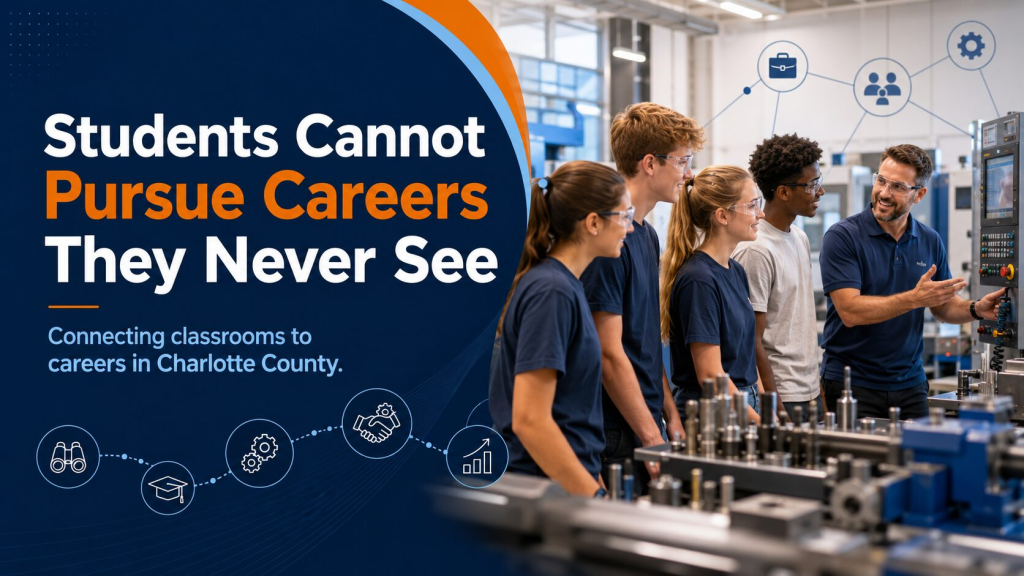
Students Cannot Pursue Careers They Never See
Students cannot pursue careers they never see.
That simple idea is one of the most important workforce development lessons for Charlotte County. If students do not know a career exists, do not understand what the job looks like, or never meet someone doing that work locally, it is harder for them to imagine that future for themselves.
That matters for employers, too.
As businesses look for reliable talent, career exposure has become more than a nice extra. It is part of building a stronger local workforce pipeline. Work-based learning helps students connect classroom lessons to real jobs, real skills, and real opportunities in their own community.
Career Awareness Starts Early
By the time students graduate, they have already made years of choices that shape their future. They have selected classes, explored interests, and started thinking about college, technical training, military service, apprenticeships, or entering the workforce.
However, those choices are only as strong as the information they have.
Many students know about careers they see often, such as teachers, doctors, firefighters, police officers, artists, or small business owners. Those careers matter, but they are only part of the picture.
Charlotte County also needs talent in aviation, advanced manufacturing, healthcare, logistics, construction, marine trades, public service, entrepreneurship, technology, and skilled trades.
Students may not know what those jobs are called. They may not know what training is required. They may not know what those careers pay, how to get started, or how someone grows in the field.
That is where career awareness makes a difference.
Work-Based Learning Makes Careers Real
Work-based learning connects students with the real world of work.
It can help students understand why communication matters, why math matters, why attendance matters, and why problem solving matters. It also helps them see how classroom skills show up in actual workplaces.
A student may think healthcare only means doctors and nurses until they learn about surgical technologists, imaging technicians, medical assistants, or healthcare administration. Another student may not realize manufacturing includes automation, design, robotics, quality control, and hands-on problem solving. Someone else may discover that aviation, construction, logistics, or skilled trades offer strong career pathways without following one traditional route.
That kind of exposure can change the way students see their future.
It also helps students test their interests earlier. Sometimes they discover a career they love. Sometimes they learn a path is not for them. Both outcomes are useful because they help students make better decisions before graduation.
Employers Play a Critical Role
Schools cannot do this alone.
Educators can teach and guide students, but employers are closest to the jobs. Businesses know which roles are hard to fill, what skills are changing, and what entry-level workers need to succeed.
That makes employer involvement essential.
The good news is that businesses do not have to launch a large program on day one. They can start with practical steps:
- Host a student tour
- Speak to a classroom
- Offer a job shadow
- Participate in mock interviews
- Share hard-to-fill roles with workforce partners
- Explain how someone grows within the company
- Explore internships or apprenticeships
Even one action can help students understand what is possible.
When employers show up, students gain visibility. Teachers and counselors gain better information. Workforce partners gain clearer insight. Businesses build early connections with future talent.
That is how a workforce pipeline grows.
Career Pathways Help People Stay Local
Work-based learning is also part of workforce attraction.
If young people believe they have to leave Charlotte County to build a meaningful career, the community loses talent. If families do not see local career opportunities, they may not understand the future that can be built here.
Career exposure helps change that.
When students visit local employers, meet professionals, and understand career pathways, they begin to see Charlotte County as more than a place to live. They begin to see it as a place to work, grow, and build a life.
That matters for students. It also matters for adult learners, career changers, parents returning to work, veterans, and underemployed residents. Many people are looking for a better path, but they need to see what is available and how to take the next step.
Employers can help make those pathways visible.
Careers Are Built Here
Workforce development is not one program. It is a system of connections between students, parents, educators, employers, training partners, and the community.
When those connections are strong, students see more options. Employers reach future workers earlier. Families understand local opportunities. Training partners align programs with real needs.
Charlotte County’s workforce future depends on making careers visible, practical, and connected to local opportunity.
Because students cannot pursue careers they never see.
And in Charlotte County, careers are built here.
Employers: Help students see what is possible in Charlotte County.
Charlotte County Economic Development can help connect businesses with education, workforce, and community partners. Explore the Employer Action Guide to find practical ways your business can support career awareness, work-based learning, internships, apprenticeships, and long-term talent development.
Continue the workforce conversation
The Talent Pipeline Starts Here
Learn why workforce development starts long before the job application.
Childcare Is Workforce Infrastructure
See why supporting working families is part of strengthening the workforce.