Charlotte County Workforce Success: Ambitrans Growth Shows Powerful Career Demand
June 16th, 2026
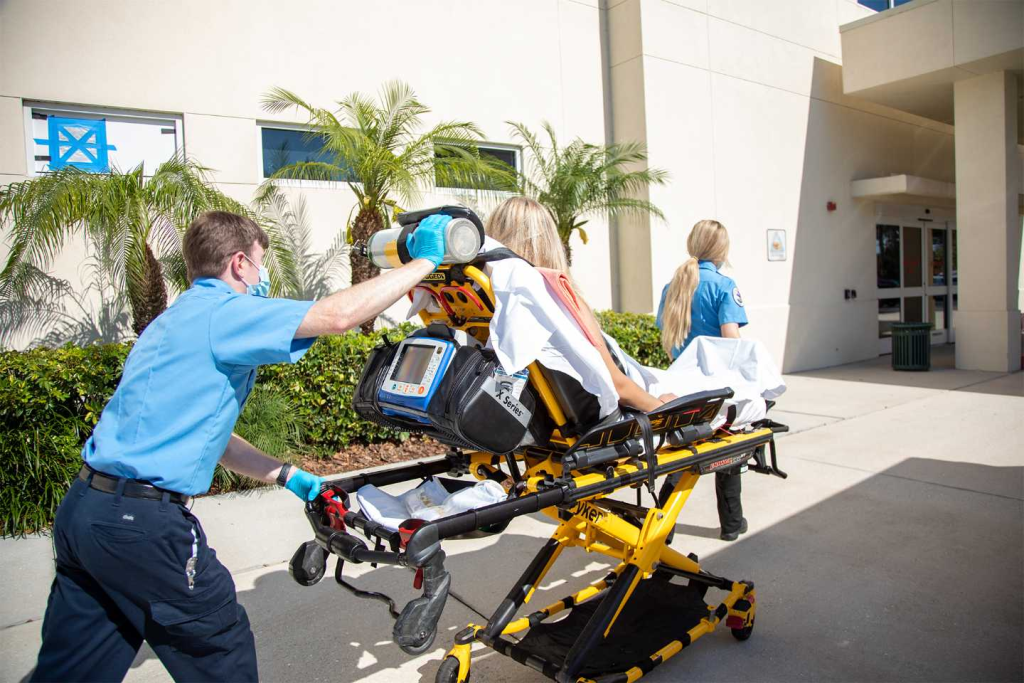

Charlotte County workforce
Charlotte County workforce growth is not just a data point. It is showing up in real companies, real jobs, and real career paths across our region.
A recent Business Observer article highlighted Ambitrans, a Charlotte Harbor-based non-emergency medical transport company that has grown to about 300 employees. The company provides 24/7 service across Charlotte, Collier, Lee, Manatee, and Sarasota counties, and Business Observer reported that Ambitrans has increased payroll by 68% since 2022, rising from 179 employees to about 300. The same article reported a 46% increase in transport calls since 2020. (Business Observer)
That matters.
Why? Because business growth depends on people. Buildings, vehicles, technology, and equipment all matter, of course. But without trained workers, even the best business plan can stall. Ambitrans is a clear example. The company has grown alongside regional healthcare demand, but its next stage depends on a familiar challenge for many employers: finding and keeping skilled talent.
For Charlotte County Economic Development, this story supports a bigger message. Our community is not only attracting growth. We are also seeing local employers build meaningful careers in industries that serve residents, hospitals, patients, veterans, families, and regional partners.
That is the sweet spot.
When a local business expands, it strengthens the economy. When that business creates career pathways, it strengthens the workforce. And when those pathways connect people to purpose-driven work, they help retain talent in Charlotte County.
A Local Employer Growing With Regional Demand
Ambitrans has a long Charlotte County story. According to Business Observer, the company was founded in 1983 with one van and wheelchair and non-medical stretcher services. Michael Grant acquired the company in 1988 under Grant Medical Transportation, and Vanessa Oliver, who had worked in the business as a teenager, returned years later and became CEO in 2020. (Business Observer)
Today, the company has about 45 ambulances, two bases, two lifts for in-house vehicle maintenance, and four mechanics on staff, according to the same report. (Business Observer)
That kind of growth tells a bigger economic development story.
Non-emergency medical transport may not always get the spotlight. Still, it plays a critical role in the healthcare ecosystem. Hospitals, emergency rooms, medical centers, rehabilitation facilities, long-term care providers, and patients all depend on reliable transportation. When healthcare demand grows, the support network around healthcare must grow too.
That is exactly where workforce comes in.
Ambitrans’ CEO told Business Observer that labor is the company’s biggest challenge. Specifically, the company needs EMTs and paramedics. (Business Observer)
This is not just an Ambitrans issue. It reflects a national workforce trend. The U.S. Bureau of Labor Statistics notes that EMTs and paramedics typically complete a postsecondary educational program and must be licensed in their state. BLS also reported median annual wages in May 2024 of $41,340 for EMTs and $58,410 for paramedics. (Bureau of Labor Statistics)
So what does this mean locally?
It means Charlotte County employers need a steady pipeline of trained workers. It also means residents who want stable, service-focused careers may have real opportunities close to home.
Emergency Medical Services Careers Need Skilled People
EMS work takes skill, judgment, and calm under pressure. It also takes heart.
Business Observer explained the difference between EMTs and paramedics in simple terms. EMTs provide basic life support, such as CPR or bleeding control. Paramedics provide advanced life support, such as starting IVs and providing medications. (Business Observer)
Those roles require training. They also require people who can work in high-pressure settings while keeping patients safe and comfortable.
That is why the labor challenge matters.
Business Observer reported that Ambitrans has increased wages for licensed paramedics by $3 per hour and continues to focus on recruitment, benefits, compensation, education, advancement, and workplace culture. (Business Observer)
That combination is important. Pay helps attract workers. Culture helps keep them. Training helps them grow. Advancement gives them a reason to stay.
For Charlotte County businesses, this is the takeaway: workforce development is not one thing. It is a full system.
A company can recruit all day. However, if employees do not see a future, they may leave. On the other hand, when workers feel valued and see clear next steps, retention gets stronger.
Ambitrans’ “hats off to you” recognition program is a small but useful example. According to Business Observer, employees receive an Ambitrans cap after a strong review or positive report from a client or supervisor. (Business Observer)
That may sound simple. Yet simple things can build culture. A recognized employee is more likely to feel seen. A worker who feels seen is more likely to stay. And a company that keeps good people can grow with more confidence.
Why Workforce Retention Matters to Charlotte County Businesses
Recruitment gets attention. Retention saves money.
That is true in almost every industry. It is especially true in fields that require credentials, safety training, customer service, and patient care.
When a business loses a skilled worker, it does not just lose a name on a schedule. It loses experience, institutional knowledge and it may also lose momentum.
For a company like Ambitrans, staffing is tied directly to service capacity. More trained workers can mean more ability to serve regional healthcare partners. Fewer workers can limit expansion, even when demand exists.
This is why workforce retention is an economic development priority.
Charlotte County’s business community needs people who can build, repair, transport, care, manage, coordinate, and lead. That includes traditional office roles. It also includes hands-on careers in healthcare support, aviation, logistics, construction, manufacturing, public service, and skilled trades.
The Ambitrans story is a strong reminder that business growth and workforce growth move together.
If employers grow faster than the labor pool, they face pressure. If the labor pool grows with employer demand, the whole region becomes more competitive.
Pay, Culture, Training, and Career Mobility
Ambitrans’ growth points to four workforce lessons that apply well beyond medical transport.
| Workforce Factor | Why It Matters to Local Employers |
|---|---|
| Pay | Competitive wages help attract skilled candidates in tight labor markets. |
| Culture | Recognition and support can reduce turnover and improve morale. |
| Training | Employees need clear ways to gain credentials and build skills. |
| Career Mobility | Workers are more likely to stay when they see a future inside the company. |
This is where Charlotte County has an opportunity.
Employers can work with education, training, and workforce partners to make career paths easier to see. Residents should not have to guess what comes next. A student, veteran, parent, retiree returning to work, or career changer should be able to understand the path from interest to training to employment.
The more visible those pathways become, the stronger the workforce becomes.
And yes, this matters for business attraction too.
Companies considering Charlotte County look at more than land, buildings, and access. They ask workforce questions early. Can they hire here? Are they open to grow here? Can they keep people here?
Stories like Ambitrans help answer those questions with local proof.
What This Means for Workers and Career Changers
For workers, this story sends a clear message: meaningful careers are being built in Charlotte County.
Not every career path requires a four-year degree. Some begin with certification; Some begin with technical training; Some begin with a first job that grows into a long-term career.
EMS and medical transport careers can appeal to people who want work with purpose. They can also appeal to people who like active, people-centered jobs. Every day is different; every patient matters; every shift supports the larger healthcare system.
That does not mean the work is easy. It is not. However, it can be meaningful.
Business Observer reported that Oliver described patient care as the company’s central mission. She said her job is to take care of employees, and their job is to take care of patients. (Business Observer)
That line captures the workforce issue well. Strong service starts with supported workers.
For career changers, this matters too. Charlotte County has residents with customer service skills, military experience, caregiving experience, logistics experience, mechanical ability, dispatch experience, and leadership potential. Many of those skills can transfer into healthcare support roles.
The question is not always, “Who has done this exact job before?”
Sometimes the better question is, “Who has the right skills, work ethic, and interest to train for this field?”
That is where workforce partners can help.
Healthcare Support Careers Can Start Close to Home
Charlotte County’s healthcare and service economy needs more than doctors and nurses. It needs the full team.
That team may include EMTs, paramedics, dispatchers, mechanics, fleet support staff, billing staff, compliance professionals, supervisors, trainers, and operations leaders.
Ambitrans shows how one local employer can support many types of jobs. According to Business Observer, the company has medical personnel, ambulances, mechanics, maintenance operations, and administrative needs tied to its regional service model. (Business Observer)
That variety matters.
A student may start by exploring EMS. A veteran may see a second career in patient transport or operations. A mechanic may find stable work keeping essential vehicles on the road. A dispatcher may support patient movement across multiple counties. A compliance-minded professional may help the company navigate healthcare systems.
This is how a local employer becomes part of the broader talent ecosystem.
The opportunity is not only one job. It is a ladder.
Charlotte County Workforce Development Is Business Development
Charlotte County workforce development is business development because companies grow through people.
That sounds simple. Still, it is one of the most important economic development truths.
When local employers like Ambitrans expand, they create jobs. When they need skilled workers, they create demand for training. When they invest in culture, pay, and career mobility, they show how businesses can compete for talent.
For Charlotte County Economic Development, this story supports several priorities:
- It highlights a local company with regional reach and strong employment growth.
- It shows why workforce attraction and retention matter to business expansion.
It also gives us a practical story to share with partners.
Healthcare demand continues to grow. BLS reports that healthcare occupations overall are projected to grow much faster than the average for all occupations from 2024 to 2034, with about 1.9 million openings projected each year on average due to growth and replacement needs. (Bureau of Labor Statistics)
That larger trend gives local stories more weight.
Ambitrans is not growing in a vacuum. It is growing in a region where medical services, population needs, and healthcare access continue to shape the economy.
The reason this matters to businesses is clear: companies need workforce solutions before labor shortages limit growth.
The reason this matters to workers is just as clear: local growth can create real career paths close to home.
The reason this matters to partners is practical: education, training, workforce development, and employer engagement must stay connected.
Conclusion
Our workforce story is not built around one single asset. It is built around connection. Employers, schools, training providers, workforce partners, and local government are close enough to work together, respond quickly, and build practical pathways around real business needs.
That matters for a company like Ambitrans. It also matters for manufacturers, aviation employers, healthcare providers, construction firms, logistics companies, and service businesses that need dependable talent.
In Charlotte County, career pathways can be easier to see because the community is still relationship-driven. Employers can sit at the table with education and workforce partners. They can explain what skills they need. Training providers can adjust programs, promote certifications, and help students understand where local jobs exist. Residents should not have to guess what comes next. A student, veteran, parent, retiree returning to work, or career changer should be able to see the path from interest to training to employment.
That is one of Charlotte County’s advantages. We are large enough to support growing regional employers, but connected enough to move with focus.
The more visible those pathways become, the stronger the workforce becomes. And the stronger the workforce becomes, the easier it is for local businesses to grow here instead of looking elsewhere for talent.
This matters for business attraction too.
Companies considering Charlotte County look at more than land, buildings, and access. They ask workforce questions early. Can they hire here? Can they grow here? Can they keep people here?
Stories like Ambitrans help answer those questions with local proof. They show that Charlotte County is not just a place where businesses operate. It is a place where businesses can build teams, develop talent, and serve a growing regional market from a strong local base.
Conclusion
Ambitrans’ growth is more than a business success story. It is a workforce story.
The company’s rise to about 300 employees shows how Charlotte County-based businesses can grow, serve regional needs, and create meaningful career paths. It also shows why talent remains one of the most important factors in business expansion.
For Charlotte County Economic Development, the message is clear: workforce attraction supports business growth. Retention supports long-term stability. Training supports opportunity. And local success stories help show workers, employers, and partners what is possible here.
Ambitrans is driving more than medical transport.
It is driving a stronger conversation about the people who keep Charlotte County’s economy moving.
Sources
- Business Observer: Charlotte County medical transport firm surpasses 300 employees, drives for more (Business Observer)
- U.S. Bureau of Labor Statistics: EMTs and Paramedics Occupational Outlook Handbook (Bureau of Labor Statistics)
- U.S. Bureau of Labor Statistics: Healthcare Occupations Occupational Outlook Handbook (Bureau of Labor Statistics)
- Florida Department of Health: Emergency Medical Technicians and Paramedics (Florida Department of Health)