Career Opportunities: Powerful Community Impact
June 2nd, 2026
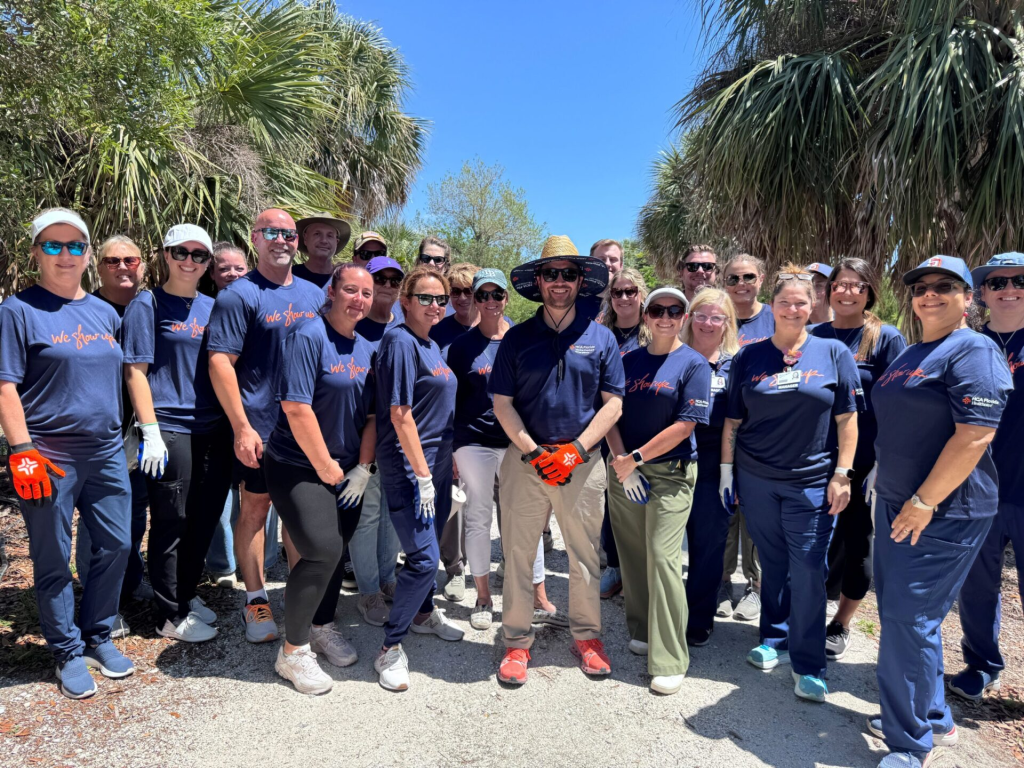
Career Opportunities
Career opportunities do not always begin with a job posting.
Sometimes, they begin with a blood drive. A food distribution event. A student mentorship program. A hospital team showing up outside the hospital walls.
That is what makes HCA Florida Healthcare’s recent community effort important for Charlotte County.
According to Florida Weekly, colleagues from five HCA Florida Healthcare hospitals in Southwest Florida recorded more than 452 volunteer hours in April through the annual We Show Up for Our Communities campaign. The effort included HCA Florida Blake Hospital, HCA Florida Englewood Hospital, HCA Florida Fawcett Hospital, HCA Florida Lehigh Hospital, and HCA Florida Sarasota Doctors Hospital. In total, 209 colleagues took part in 14 events, creating an estimated $15,783 in community impact.
That matters because healthcare is more than treatment. It is also stability. It is access. It is workforce. It is the quiet work that helps families stay healthy enough to learn, work, care for others, and plan for tomorrow.
For Charlotte County, that connection is especially important. As the region continues to grow, healthcare employers play a major role in quality of life. Residents need access to care. Employers need a healthy workforce. Students need to see meaningful paths into local careers. Families need to know that help exists when life gets hard.
And here is the good news: this kind of community work touches all of those needs at once.
Why Community Health Matters to Charlotte County
A strong community does not grow from buildings alone. It grows from people who can live well, work well, and recover when life gets difficult.
That is why HCA Florida Healthcare’s volunteer work is worth more than a headline. It reflects a broader idea: health starts long before someone walks into an emergency room.
Food access matters. Blood donations matter. Student mentorship matters. Environmental cleanups matter. Each one supports daily life in a practical way.
Florida Weekly reported that HCA Florida Healthcare teams supported organizations such as Suncoast Blood Centers, OneBlood, LifeLink of Florida, Manatee Technical College, Venice High School, Big Brothers Big Sisters, All Faiths Food Bank, Meals on Wheels Plus, Lehigh Community Services, Venice Area Beautification Inc., the Center of Anna Maria Island, and the Pace Center for Girls.
That list tells a bigger story.
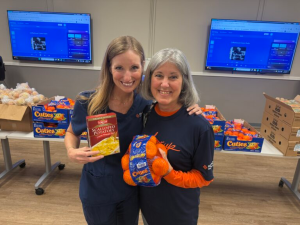
Courtesy Photo
These efforts were not limited to one issue. Instead, they touched several drivers of health, including food access, workforce development, environmental conditions, and lifesaving donations. In plain English, that means the work reached people where they live.
For Charlotte County, this is where healthcare and economic development overlap. A healthy community helps employers grow. It helps families stay rooted. It helps students imagine a future close to home. It also helps attract workers who want more than a paycheck. They want a place where the community takes care of its own.
Healthcare Volunteer Work Builds Local Trust
Hospitals are often seen during stressful moments. People meet healthcare workers when someone is sick, injured, scared, or waiting for answers.
So when hospital colleagues show up in everyday community spaces, something changes.
They become neighbors. Mentors. Volunteers. Helpers.
That kind of visibility builds trust. It also reminds people that healthcare workers are part of the fabric of the community, not separate from it.
During the April campaign, colleagues supported lifesaving blood donation efforts. More than 76 donors contributed across multiple hospitals, with the potential to help save 222 lives, according to the Florida Weekly article. Additional events also raised awareness for organ, eye, and tissue donation.
That is practical impact. It is also personal.
Blood supply can feel like an invisible issue until someone needs it. Then it becomes urgent. By supporting blood donation and awareness, hospital teams helped strengthen a system that patients may depend on during emergencies, surgeries, cancer treatments, and other serious medical needs.
In a growing region, that kind of readiness matters. More residents mean more demand. More demand requires stronger systems. Stronger systems require people who care enough to show up before the crisis happens.
Food Access, Blood Donations, and Real Community Needs
Healthcare does not stop at the hospital door.
Food insecurity is a health issue. A family that struggles to put meals on the table may also struggle with stress, chronic illness, transportation, school attendance, and work stability.
That is why the food support in this campaign deserves attention.
Florida Weekly reported that HCA Florida Healthcare teams helped reach 203 families and 463 individuals, providing 4,600 pounds of food, equal to about 3,830 meals.
Those numbers are not abstract. They represent dinner on the table. Groceries that stretch a household budget. One less worry for a parent. One more chance for a student to focus.
From a workforce perspective, this matters too. People cannot fully participate in the economy when basic needs are unstable. They cannot focus on training, job interviews, school, or advancement when the ground beneath them feels shaky.
So, yes, food access is a health issue. But it is also a workforce issue. It is a family issue. It is a community issue.
That is why partnerships between hospitals and community organizations are so powerful. They connect resources to real needs. They also show residents that large employers can be active partners in the place they serve.
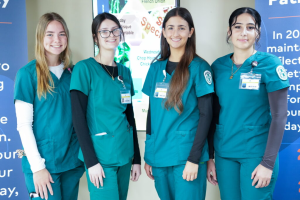
Courtesy Photo
Healthcare Mentorship Opens Doors for Students
One of the most important parts of this story is the connection to students.
Florida Weekly noted that HCA Florida Healthcare colleagues supported healthcare career education and mentorship efforts, including programs connected with Big Brothers Big Sisters Sun Coast. Fawcett Hospital leads monthly mentorship programs that help inspire interest in healthcare careers.
That matters because many students cannot choose a path they have never seen.
A student may know the word “nurse.” They may know the word “doctor.” However, they may not know about the wide range of roles that keep a hospital running. Healthcare also needs technicians, imaging professionals, lab teams, therapists, administrative staff, patient access workers, facilities teams, and many more skilled professionals.
When students meet people in those roles, the future gets clearer.
Suddenly, a career is not just an idea. It has a face. It has a schedule. It has training steps. It has a local employer. It has a reason.
That is how career opportunities become real.
For Charlotte County, this is especially valuable. Local students need clear pathways into stable careers. Employers need talent. Families want their children to have choices without feeling forced to leave the region to build a future.
Mentorship helps connect those pieces.
Students Need to See the Future Up Close
Workforce development works best when it feels real.
A flyer can help. A website can help. A classroom presentation can help. However, nothing replaces a direct connection with people doing the work.
That is why mentorship matters.
Students can ask simple but important questions:
- What training do I need?
- What does a normal day look like?
- Can someone like me really do this?
Those questions can change a student’s direction.
Healthcare careers also offer something many young people want: purpose. Students want to know their work will matter. In healthcare, the mission is easy to see. You help people. You solve problems. You support families during hard moments.
That sense of purpose can be a strong pull for local talent.
It also fits Charlotte County’s larger workforce story. The region is growing. Employers need skilled workers. Schools and training partners are building stronger pathways. Meanwhile, healthcare remains one of the most essential sectors for long-term community strength.
So when HCA Florida Healthcare colleagues mentor students, they are not only doing a good deed. They are helping build the future workforce.
Stronger Hospitals Support a Stronger Workforce
Healthcare employers have a unique role in economic development.
They provide care. They create jobs. They support families. They attract professionals. They also help make a community more livable for other industries.
Think about it this way: a company looking at Charlotte County will consider sites, roads, utilities, workforce, housing, and quality of life. Healthcare access fits into that same decision. Employers want to know their workers can access care. Families want to know help is nearby. Retirees, young parents, students, and working adults all need confidence in the local healthcare system.
That is why hospital engagement matters beyond the medical field.
HCA Florida Healthcare’s statewide scale also adds context. According to HCA Florida Healthcare, the network includes nearly 700 sites of care across the state, with more than 80,100 colleagues and 11,230 physicians supporting more than 12.79 million patient encounters each year.
For local communities, those numbers show capacity. However, the April volunteer campaign shows something just as important: commitment.
Big systems can feel distant. Local action makes them feel close.
When colleagues volunteer, mentor, donate, clean up, and support food access, they show that healthcare leadership includes service outside clinical care. That kind of presence strengthens the community. It also helps people see healthcare as a place to work, serve, grow, and build a meaningful future.
FAQs
Why is this important for Charlotte County?
This story matters because health, workforce, and quality of life are connected. When healthcare employers support food access, student mentorship, blood donation, and community service, they help build a stronger local foundation.
What was HCA Florida Healthcare’s volunteer campaign?
The campaign was part of HCA Florida Healthcare’s annual We Show Up for Our Communities effort. In April, colleagues from five Southwest Florida hospitals volunteered across 14 events.
How many people participated?
Florida Weekly reported that 209 colleagues participated and recorded more than 452 volunteer hours during the campaign.
How did the campaign support food access?
Hospital colleagues helped distribute 4,600 pounds of food, equal to about 3,830 meals. The effort reached 203 families and 463 individuals.
How does this connect to workforce development?
The campaign included healthcare career education and mentorship. These efforts help students learn about local career paths and see how they can enter the healthcare field.
Why are healthcare career opportunities important locally?
Healthcare careers support residents, families, and employers. They also give students and job seekers meaningful paths into stable work that serves the community.
Conclusion
Career opportunities grow when communities invest in people.
That is the larger lesson from HCA Florida Healthcare’s volunteer campaign. The work supported blood donation, food access, student mentorship, environmental efforts, and community partnerships. However, it also did something deeper.
It showed what happens when healthcare teams step beyond the hospital and into the neighborhoods they serve.
For Charlotte County, that kind of commitment matters. It supports families. It strengthens trust. It introduces students to healthcare careers. It helps residents see that the future of work is not somewhere far away. It is being built right here, one partnership at a time.
And that is powerful.
Sources
https://www.hcafloridahealthcare.com/about-us/our-community-impact
Colleagues from HCA Florida Sarasota Doctors Hospital come together during a Venice cleanup project. -COURTESY PHOTO