Aviation Workforce: A Powerful Opportunity for Charlotte County
June 2nd, 2026

 Florida’s aviation workforce is more than a labor issue. It is an economic development issue, a business growth issue, and a future-of-work issue.
Case Study Strengthen Aviation Talent Pipelines in Aviation WorkforceFlorida
That message comes through clearly in the Florida Chamber Foundation’s 2025 case study, Leveraging Workforce Data to Strengthen Aviation Talent Pipelines in South Florida and the Florida Panhandle. The report highlights a challenge that communities across Florida are already working to solve:aviation is growing quickly, and current workforce and education data can help show where employers and training partners should focus next.
For Charlotte County, that matters.
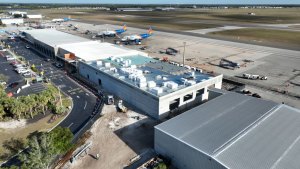
Photo courtesy of Punta Gorda Airport
Aviation has a visible presence here. Punta Gorda Airport connects travelers, supports commerce, and helps strengthen the region’s business climate. FDOT’s 2022 study valued PGD’s total economic impact at $1.7 billion, including visitor spending, supplier activity, and related impacts. However, airports do not grow on runways alone. They grow through people. They need aircraft maintenance technicians, avionics professionals, pilots, logistics workers, ground operations teams, engineers, instructors, and business support staff.
The good news? Charlotte County is already building the pieces that matter.
With Punta Gorda Airport, Charlotte Technical College’s aviation maintenance training, workforce partnerships, and a growing focus on career-connected education, the region has a strong foundation. Now, the opportunity is to keep connecting students, employers, educators, and industry leaders in a way that turns interest into careers.
Why aviation talent pipelines matter in Florida
Florida’s aviation industry is a major economic engine. According to the Florida Department of Transportation’s 2022 Statewide Aviation Economic Impact Study, Florida’s aviation system generated more than $336 billion in annual economic activity and supported more than two million jobs.
That kind of impact does not happen by accident.
It happens when airports, employers, training programs, local governments, and workforce partners move in the same direction. It also happens when communities look ahead instead of waiting for a shortage to become a crisis.
The Florida Chamber Foundation case study points to a real concern: the aviation sector is growing, but many skilled workers are nearing retirement. The report notes that retirement risk is one of the biggest concerns facing the aviation industry, with a large share of industry certificate holders age 62 or older.
That is where current workforce data becomes powerful.
Instead of guessing where gaps exist, employers and communities can look a t enrollment, and placement outcomes,
program completions, job openings, wages, and enrollment to better understand where talent gaps exist. Then they can ask better questions.
Are enough students entering aviation programs, enough completing them, graduates staying in the region, are employers partnering with schools early enough, and finally are students aware that aviation careers exist close to home?
Those questions matter in Charlotte County because aviation is not some far-off industry. It is right here.
What the workforce data shows
The Florida Chamber Foundation case study shows a clear imbalance between aviation workforce supply and demand. For example, the report identifies gaps in several important aviation roles, including aircraft maintenance technicians, avionics technicians, and commercial pilots.
One example stands out.
The Florida Chamber Foundation case study reports 1,574 completions compared with 1,881 openings for aircraft maintenance technicians. That leaves a gap of more than 300 workers. It also reports 58 completions compared with 301 openings for avionics technicians and 175 completions compared with 1,041 openings for commercial pilots.
Those numbers tell a simple story.
Florida does not just need more aviation jobs. Florida needs more people ready to fill them.
That is important for employers looking at expansion. A company can find a building. It can review infrastructure. It can compare costs. But when it asks, “Can we hire the people we need?” the answer depends on the strength of the local aviation workforce.
This is where Charlotte County has a competitive opportunity.
A region that can connect industry demand to training programs has a stronger story to tell. It can show employers that workforce readiness is not an afterthought. It is part of the business case.
Technical training can close the gap
Technical colleges play a direct role in meeting aviation workforce needs. The Florida Chamber Foundation case study highlights how technical education can prepare students for high-demand aviation careers, especially hands-on roles like aviation maintenance and avionics.
That point matters because aviation careers are not limited to four-year degrees.
Many high-value aviation jobs depend on technical training, certifications, and applied experience. These are the kinds of careers that can change a student’s future. They can also help local employers grow.
Charlotte Technical College is an important part of that local picture. Its Aviation Airframe Mechanics and Aviation Powerplant Mechanics programs support pathways into aviation maintenance careers tied to real industry demand. For students, that means a clearer route from classroom to career. For employers, it means a stronger local talent pipeline.
And honestly, that is the whole point. 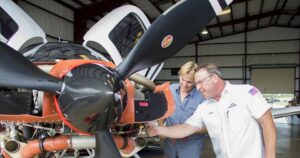
Aviation workforce development works best when students can see the path. They need to understand what the job is, what training is required, what they can earn, and where they can work. When those pieces are clear, aviation becomes less abstract. It becomes reachable.
Why Charlotte County is part of the solution
Charlotte County has the right ingredients to support aviation workforce growth.
Punta Gorda Airport gives the region a strong aviation anchor. Charlotte Technical College supports career training. Local employers, educators, and workforce partners can help students understand the opportunities available in aviation, aerospace, maintenance, logistics, and related industries.
Also, Charlotte County offers something many students and workers want: a place where they can build a career and a life.
That matters. Talent attraction is not only about job postings. It is about quality of life, career pathways, family stability, and the belief that a young person can stay here, grow here, and succeed here.
For employers, that is a powerful message. A strong aviation workforce does not just help fill today’s openings. It helps build confidence for tomorrow’s investment.
The Florida Chamber Foundation case study encourages employers to use workforce data to guide partnerships, training investments, scholarships, facility planning, and program expansion. That same idea applies here.
Charlotte County can use data to keep asking the right questions:
- Where is aviation demand growing?
- Which programs need more awareness?
- How can employers connect earlier with students?
- What barriers keep students from entering aviation training?
- How can local partners support career exposure before graduation?
Those questions can lead to action.
Building the next generation of aviation careers
The future of aviation in Florida depends on people. It depends on students who discover aviation early; it depends on instructors who prepare them well; it depends on employers who show up, offer guidance, and create work-based learning opportunities; it also depends on communities that understand talent is infrastructure.
Charlotte County is well-positioned to be part of that work.
As Florida’s aviation sector continues to grow, the communities that invest in aviation workforce readiness will stand out. They will be better prepared to support employers. They will be better positioned to attract new business. Most importantly, they will give residents access to careers that are technical, stable, and connected to a growing statewide industry.
That is the real opportunity.
Aviation workforce development is not just about filling jobs. It is about building futures.
FAQs
Why is the aviation workforce important to Charlotte County?
The aviation workforce is important because Charlotte County has a strong aviation asset in Punta Gorda Airport and a growing need for skilled workers in aviation-related careers. A stronger talent pipeline helps employers grow and gives residents more career options.
What is the biggest aviation workforce challenge in Florida?
One of the biggest challenges is the gap between job openings and trained workers. The Florida Chamber Foundation case study shows shortages in roles such as aircraft maintenance technicians, avionics technicians, and commercial pilots.
How can technical colleges help the aviation industry?
Technical colleges provide hands-on training for high-demand aviation careers. Programs in airframe mechanics, powerplant mechanics, avionics, and related fields can help students move into skilled jobs faster.
Why does workforce data matter?
Workforce data helps employers and communities see where gaps exist. It can show program completions, job openings, wages, and placement outcomes. As a result, partners can make smarter decisions about training and investment.
How does aviation support Florida’s economy?
Florida’s aviation system supports more than two million jobs and generates more than $336 billion in annual economic activity, according to FDOT’s 2022 Statewide Aviation Economic Impact Study.
What can employers do to support aviation talent pipelines?
Employers can partner with schools, offer internships, support scholarships, participate in career events, and help shape training programs around real workforce needs.
Conclusion
Florida’s aviation industry is growing, and the demand for skilled talent is growing with it. The Florida Chamber Foundation’s case study makes the issue clear: communities need strong, data-informed aviation workforce pipelines to keep pace with industry needs.
For Charlotte County, this is an opportunity.
With Punta Gorda Airport, Charlotte Technical College, and a community focused on workforce readiness, the region can help build the next generation of aviation talent. That means more career pathways for residents, stronger support for employers, and a more competitive future for Charlotte County.
Sources
Florida Chamber Foundation, Case Study: Leveraging Workforce Data to Strengthen Aviation Talent Pipelines in South Florida and the Florida Panhandle
https://www.flipsnack.com/flchamber/case-study-strengthen-aviation-talent-pipelines-in-florida
Florida Department of Transportation, 2022 Florida Statewide Aviation Economic Impact Study
https://www.fdot.gov/aviation/economicimpact22.shtm
FloridaCommerce, 2025 Target Industry Report
https://floridajobs.org/docs/default-source/reports-and-legislation/target-industry-report-2025.pdf
Aviation Technician Education Council, 2025 Pipeline Report
https://www.atec-amt.org/pipeline-report