What Site Selectors Are Screening for in 2026
August 26th, 2026
The first screen is about risk and readiness
A site can look right on a map and still fall off a project shortlist. In 2026, location advisors and corporate teams are screening for evidence that a property, community and service team can support the project without avoidable delay or uncertainty.
Business Facilities’ July/August 2026 issue reflects that shift. Its coverage gives substantial attention to commercial sites, water infrastructure, energy, manufacturing and the location factors that shape a company’s path to operation.
1. Complete, decision-ready property information
The first test is whether a site can be understood quickly. Acreage alone is not enough. Review teams need clear boundaries, ownership, zoning, asking terms, access, surrounding uses and known development constraints.
They also need consistent data. If a property record, map and brochure conflict, confidence drops. Complete information helps a prospect decide whether a site deserves deeper engineering and financial review.
2. Utility capacity that matches the operation
Water, wastewater, power, natural gas and telecommunications are no longer background details. They can determine whether a project advances at all.
A useful response identifies the serving providers, the infrastructure near the site, known capacity information and the next step for confirming project-specific demand. Clear utility contacts and realistic extension timelines matter just as much as a line on a map.
3. A believable path to operation
Companies are looking for speed, but they are also looking for predictability. That means understanding zoning, entitlements, permitting steps, review responsibilities and the issues that could affect a schedule.
No community can promise that every project will move on the same timeline. However, a coordinated response can show who is responsible, what information is required and how the company can prepare for the next decision point.
4. Workforce evidence, not general claims
A location must demonstrate that employers can recruit, train and retain people for the work. Site selectors are comparing labor-shed size, occupations, wages, commuting patterns, training capacity and competition for the same skills.
They also want to see how education and workforce partners respond to a specific employer. Program names are useful. A clear connection between the employer’s positions and the local training pipeline is better.
5. Connectivity that fits the business model
Connectivity should be explained in operational terms. The right factors may include highway access, regional market reach, commercial air service, general aviation, port access or proximity to customers and suppliers.
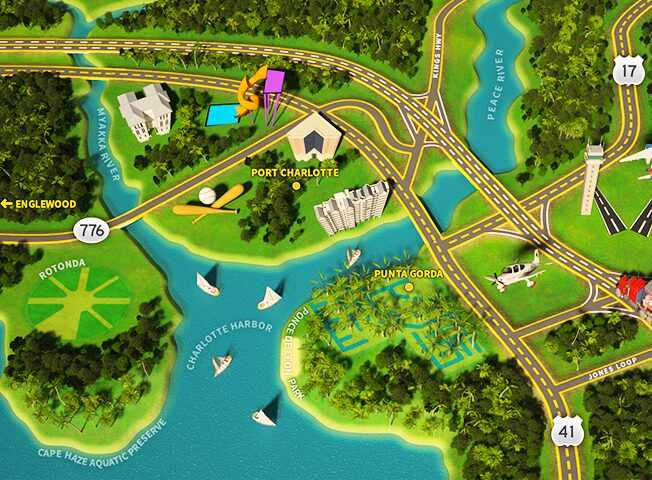
In Charlotte County, Interstate 75 supports north-south access through Southwest Florida. Punta Gorda Airport provides commercial service and general aviation access. The relevance depends on the project, so the strongest location response connects infrastructure to the company’s actual movement of people, products and services.
6. Resilience and long-term operating confidence
Risk screening now begins earlier. Companies may ask about flood exposure, storm planning, insurance conditions, infrastructure redundancy, emergency response and business continuity.
The goal is not to suggest that any location is risk-free. Instead, communities need reliable information, responsible contacts and a clear explanation of how risks are evaluated and managed.
7. A responsive local team
A complete data package is only part of the decision. Project teams also notice response time, follow-through and whether local partners work from the same facts.
Charlotte County Economic Development maintains an inventory of available industrial and commercial sites. We also help companies connect with site-specific information, zoning and infrastructure resources, workforce partners and the appropriate development contacts.
Make the first screen easier
The communities that move forward are often the ones that make a complex decision easier to evaluate. Clear site data, utility detail, workforce evidence, realistic timelines and coordinated support reduce uncertainty before a company invests more time and money in due diligence.
If Charlotte County is on your location list, start with our available-property and business-resource information. Then contact our team for a project-specific conversation at https://cleared4takeoff.com/about/contact/.
Sources
https://businessfacilities.com/business-facilities-22nd-annual-rankings-report-2026-state-rankings/
https://cleared4takeoff.com/business-support/business-resources/
https://cleared4takeoff.com/sites/target-industries/
https://cleared4takeoff.com/about/contact/
Business Facilities, July/August 2026 issue supplied through SEDC